More Than Just A Window Dressing
Curtains are one of those things that people tend to leave until the end of a project — and then rush. The paint is done, the furniture is in, and suddenly you need something on the windows. But curtains do more for a room than almost any other single element. They control light, affect how warm or cool a space feels, absorb sound, and set the entire tone of a room — from relaxed and airy to rich and formal.
Choosing the right curtain fabric isn’t just about picking a colour you like. It’s about understanding how a material behaves: how it drapes, how it filters light, how it holds up over time, and how it works with everything else in the room. Here’s what we’d encourage you to think about before you commit.
Start With the Room, Not the Fabric
Before you even open a fabric book, take a proper look at the room. Ask yourself a few honest questions. How much natural light does the room get? Which direction do the windows face? Is this a room where you need privacy, blackout, or just a soft frame around the window? Is it a busy family space or a quieter room?
A south-facing living room in Galway will have very different needs to a north-facing bedroom. South-facing rooms get stronger, more direct light — fabrics here will be more exposed to fading over time, so durability and colourfastness matter. North-facing rooms tend to get cooler, flatter light, which means heavier fabrics and warmer tones can help the space feel more inviting rather than cold.
The function of the room matters just as much. A kitchen or dining room where curtains sit near cooking or foot traffic calls for something practical and washable. A bedroom might need a heavier fabric with blackout lining. A living room gives you the most freedom to be expressive — but even here, if you have young children or pets, that beautiful pale linen might not be the most realistic choice.
Understanding Fabric Types

Not all curtain fabrics are created equal, and the differences go well beyond appearance. Here’s what you should know about the most commonly used materials.
Linen is one of the most popular choices for curtains, and for good reason. It has a beautiful, relaxed drape and lets light filter through softly. Lighter linen weaves have an almost ethereal quality — they move with the breeze and look effortlessly elegant. Heavier linen weaves hang more substantially and feel more structured. One thing to be aware of: linen creases naturally. That’s part of its character, not a flaw, but if you prefer a crisp, smooth finish, it may not be right for you. Linen also works well in the Irish climate — its natural fibres help regulate temperature, keeping rooms cooler in summer and adding a layer of insulation in winter.
Cotton is versatile, hardwearing, and widely available in a huge range of prints and weights. It hangs well, takes colour beautifully, and can be dressed up or down depending on the heading style and any trimmings you add. Cotton curtains often benefit from lining, which gives them more body, helps with light control, and protects the fabric from sun damage. A cotton-viscose blend adds a touch of extra softness and a subtle lustre that works well in more formal settings.
Velvet is a statement fabric. It’s heavy, rich, and blocks light extremely well — making it an excellent choice for bedrooms or media rooms. Velvet curtains also provide real thermal insulation, which is worth thinking about in older Irish homes where windows can be draughty. The weight of velvet means it hangs in deep, structured folds that give a room a sense of luxury. Just be aware that it collects dust more readily than smoother fabrics, and it needs careful handling when cleaning.
Silk offers a beautiful sheen and an elegant drape, but it’s the most high-maintenance option. Silk is susceptible to sun damage and will fade if exposed to direct light over time. It also requires professional dry cleaning. If you love the look of silk but want something more practical, a silk-blend or a fabric with a similar finish — like a fine cotton sateen — can give you the aesthetic without the worry.
Wool and wool blends are underrated for curtains. Wool is naturally insulating, flame-retardant, and has a lovely weight and texture. It’s particularly well suited to period homes or rooms with a more traditional feel. In the west of Ireland, where temperatures can drop and damp is a consideration, wool’s natural moisture-wicking properties are a genuine practical advantage.
Think About Pattern and Scale
This is where a lot of people get stuck. You’ve found a fabric you love in a sample book — but will it actually work as a full pair of curtains?
One thing that catches people out is how different a pattern looks when it’s pleated and drawn back versus when it’s flat. Curtains spend most of their life pulled open, which means the fabric is folded into vertical pleats. Large, bold patterns can get lost in those folds — you only see the full design when the curtains are closed, which in most rooms is only at night. Smaller to medium-scale patterns and abstract prints tend to read better in pleated curtains because you can appreciate the design whether the curtains are open or closed.
If you’re set on a large-scale print, it can work beautifully — but it often works best on a wide window where there’s enough fabric to let the pattern breathe, or in a room where the curtains will frequently be drawn closed.
For pattern mixing, a useful rule of thumb is to keep patterned curtains against plain walls, and vice versa. If you’ve already got a bold wallpaper or textured wall finish, a plain or subtly textured curtain fabric will complement it without competing. If your walls are quiet, the curtains become an opportunity to introduce pattern and visual interest.
Colour: More Than Just Matching

The instinct with curtain colour is often to “match” — match the sofa, match the walls, match the cushions. But the best schemes are usually more nuanced than that. Rather than matching exactly, think about how your curtain colour relates to the wider palette of the room.
Picking up an accent colour from a rug, a piece of art, or even the veining in a stone worktop can create a much more considered, layered feel than simply matching everything to the same shade. If you’re drawn to neutrals, consider going a shade or two darker than your walls — this creates depth and definition without introducing a competing colour. A curtain that’s too close in shade to the wall can make the whole room look flat.
One practical note: lighter-coloured fabrics tend to show less fading over time than darker or very vibrant shades. If your windows get strong sunlight, this is worth factoring into your decision. Lining your curtains — particularly with a UV-protective interlining — will help with this significantly.
Don’t Forget the Lining
Lining is one of those details that makes an enormous difference to the finished result, but it’s rarely the thing people get excited about. A good lining gives your curtains more body and improves how they drape. It protects the face fabric from sun damage and fading, adds a layer of thermal and acoustic insulation, and gives a clean, uniform appearance from outside the house.
For bedrooms, a blackout lining is well worth the investment — it blocks light almost entirely, which makes a real difference in the Irish summer when it’s bright until late in the evening. For living rooms and other daytime spaces, a standard cotton lining or interlining will give you the weight and protection you need without blocking out all the light.
If you want a lighter, more informal look — unlined linen in a kitchen or bathroom, for example — that can work too, but go in with your eyes open. Unlined curtains will hang more loosely, fade faster, and offer less insulation.
Heading Styles Matter
The heading — the way the top of the curtain is gathered or pleated — affects how the fabric hangs and the overall style of the room. A pencil pleat is classic and versatile, working well with most fabrics. A pinch pleat (or triple pleat) gives a more tailored, formal look and works particularly well with heavier fabrics like velvet or interlined cotton. An eyelet heading suits a more contemporary, relaxed space but tends to work best with medium-weight fabrics that can hold the structure of the ring without sagging. A wave heading creates a soft, continuous S-curve and is popular in modern interiors — it’s particularly effective with sheers or lighter-weight curtains on a ceiling-mounted track.
The heading style also determines how much fabric you’ll need. A pinch pleat typically requires two and a half to three times the track width in fabric, while an eyelet heading needs less. This affects both the look and the cost, so it’s worth discussing with your curtain maker early on.
See It Before You Decide

This is the single most important piece of advice we can give: don’t choose curtain fabric from a photograph or a tiny swatch. Fabrics look completely different depending on the light they’re seen in, and a colour that looks perfect in a showroom can shift dramatically when you get it home.
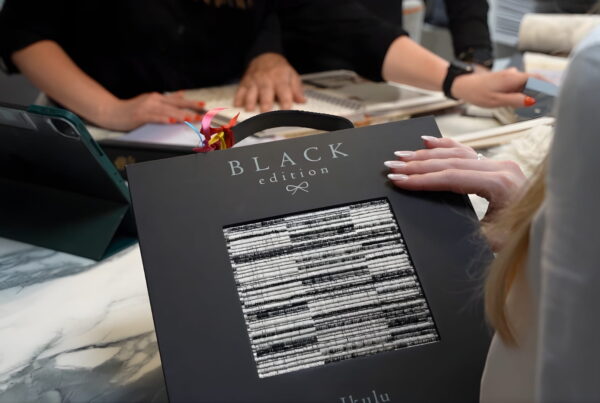
Take samples home. Pin them up near the window where the curtains will hang. Look at them in the morning, in the afternoon, and at night with the lamps on. Notice how the colour changes, how the light comes through, and how the texture feels against your hand. This is exactly what a fabric library is designed for — a place where you can take your time, see fabrics in natural light, and make a confident decision before committing.
If you’re in the west of Ireland and would like to explore curtain fabrics in person, The Design Barn in Galway has a curated library of materials from leading design houses, and the team is always happy to help guide your selection — whether you’re starting from scratch or narrowing down a final shortlist.